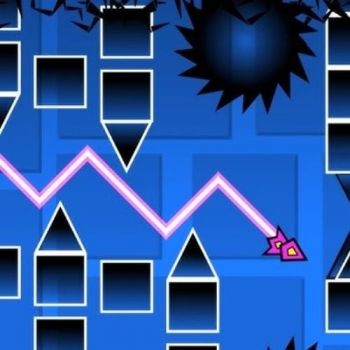
Overview of Geometry Dash Wave Challenge
Geometry Dash Wave Challenge is a rhythm based platformer that builds on the core mechanics of the popular Geometry Dash series. The game invites players to navigate a series of geometric obstacles that move in time with an energetic soundtrack. Each level is designed as a continuous wave of challenges that test reflexes and timing. The visual style remains true to the series with bright colors, sharp lines and a minimalist aesthetic that keeps the focus on the gameplay.
The challenge is presented as a single long run rather than a collection of separate stages. This format encourages players to develop a sense of flow as they progress from one segment to the next. The difficulty curve is gradual at first, allowing newcomers to become comfortable with the timing, then it ramps up with faster patterns and tighter gaps that require precise input.
Gameplay Experience and Strategies
The heart of the experience lies in the relationship between the music and the obstacles. Each beat corresponds to a visual cue, and mastering this rhythm is the key to success. Players who listen closely to the soundtrack will notice that spikes, platforms and moving blocks appear exactly when the music reaches a certain point. This predictable pattern makes it possible to anticipate the next move before it arrives.
Understanding the Rhythm
When you first start, focus on the beat rather than the visual clutter. The background track provides a steady pulse that guides your jumps. Try tapping in time with the music even before you encounter an obstacle. Over time the timing will become second nature and you will be able to react without looking directly at the screen.
Managing Difficulty
The wave format means that there are no checkpoints. A single mistake sends you back to the beginning of the run. To mitigate frustration, break the experience into mental sections. Identify a point where the pattern changes and treat it as a new mini level. By mastering each segment individually you can gradually improve your overall time.
Tips for New Players
New players often feel overwhelmed by the speed of the later sections. The following guidance can help smooth the learning curve.
- Start with a low volume setting for the music. This allows you to hear the beat more clearly without distraction from sound effects.
- Practice the basic jump timing in a calm environment. A quiet room reduces external interruptions and helps you focus on the rhythm.
- Watch replays of skilled players. Observing how they position themselves before a spike can reveal subtle timing tricks that are not obvious at first glance.
- Take short breaks after a few failed attempts. Fatigue reduces reaction speed and can lead to repeated errors.
- Adjust the game’s visual contrast if the colors feel too bright. A clearer view of the obstacles improves precision.
Frequently Asked Questions
Is Geometry Dash Wave Challenge suitable for beginners?
Yes. The early part of the run is designed to introduce the rhythm mechanic at a relaxed pace. New players can build confidence before the speed increases.
Can I play the game on a mobile device?
The game is available on platforms that support touch input. The controls adapt to screen taps, allowing the same rhythm based experience as on a computer.
How can I improve my high score?
Improvement comes from consistent practice and listening closely to the music. Focus on mastering each segment, and aim to reduce the number of mistakes in the most demanding sections.
Are there any hidden secrets or easter eggs?
While the primary focus is on the wave of obstacles, the developers have placed subtle visual references that reward careful observation. Exploring the background elements may reveal nods to earlier titles in the series.
What makes this challenge different from other Geometry Dash levels?
The continuous wave format eliminates checkpoints, creating a single uninterrupted test of skill. This design encourages a deeper immersion in the rhythm and offers a fresh take on the familiar platforming formula.